Blog

  • Grand Wagoneer 2026 Price: What the New Lower Entry Cost Buys

    Grand Wagoneer 2026 Price: What the New Lower Entry Cost Buys

    A practical breakdown of official MSRPs, destination charges, out-the-door estimates, monthly payments, trim value, fuel costs, and new-versus-used decisions

    Representative version Base MSRP With destination Buyer role
    Grand Wagoneer $63,995 $66,790 Lowest-cost entry into the 2026 lineup
    Limited Altitude $72,060 $74,855 Dark styling and added comfort
    Upland $73,060 $75,855 Towing and off-road-focused equipment
    Limited Reserve $79,960 $82,755 Luxury value without Summit pricing
    Summit Obsidian $94,310 $97,105 High-end equipment and blacked-out design

    Key Takeaways

    • The 2026 Grand Wagoneer starts at $63,995 before the $2,795 destination charge, or $66,790 delivered.
    • The full gasoline-model range reaches approximately $103,105 after wheelbase, drivetrain, trim, and option differences.
    • The lower entry price comes with a 420-hp Hurricane twin-turbo inline-six rather than the previous 540-hp high-output engine.
    • Upland is the capability-focused choice, while Limited Reserve offers the strongest luxury value for many families.
    • A realistic purchase budget should include taxes, registration, dealer fees, insurance, fuel, tires, and financing interest.

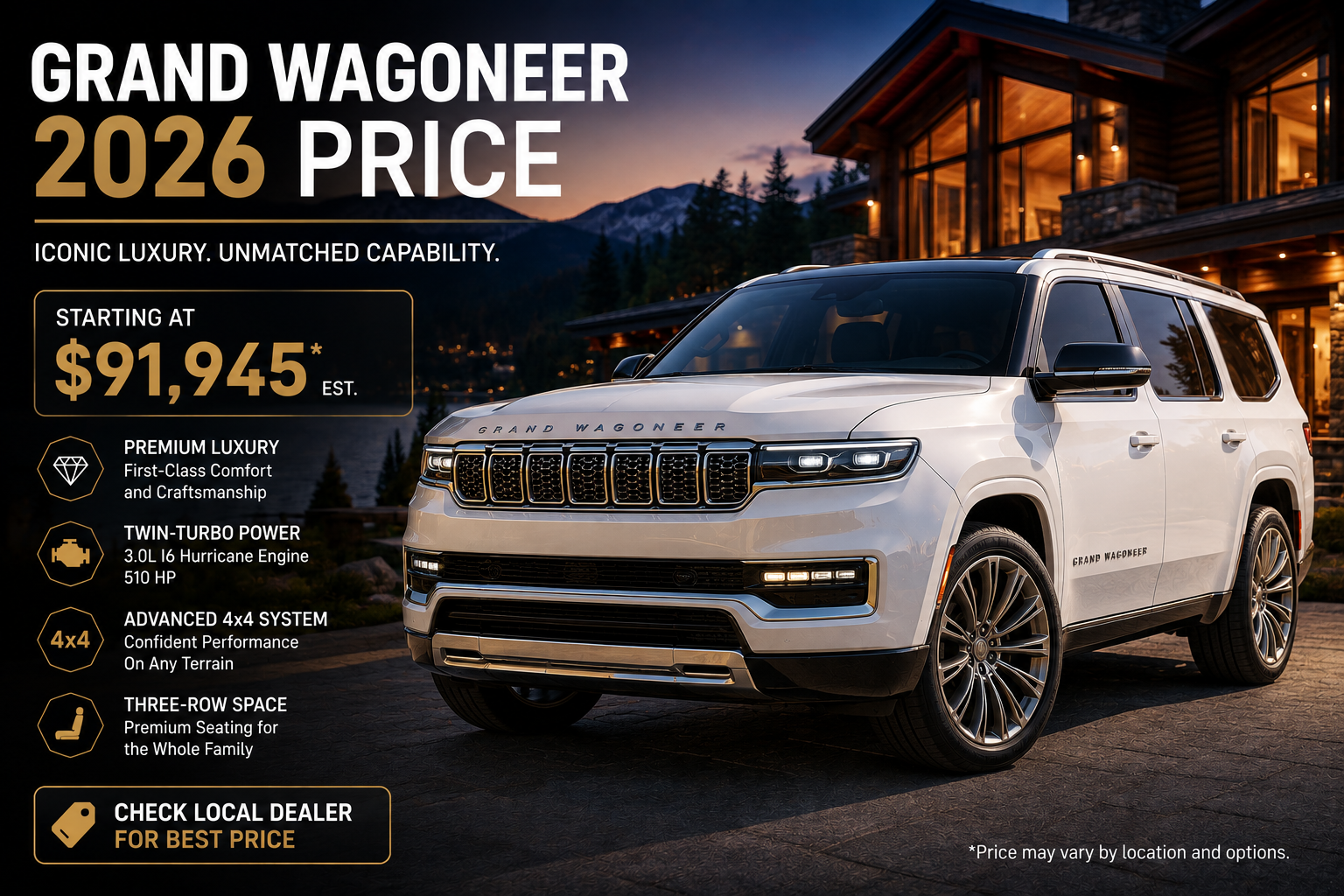
    The grand wagoneer 2026 price begins at $63,995 before destination, which is a major shift for a nameplate that previously entered the market much closer to premium luxury-SUV territory. After the $2,795 destination charge, the least expensive configuration starts at $66,790 before taxes, registration, options, and dealer-added products.

    This price reset changes the vehicle’s competition. The entry model now overlaps with well-equipped Chevrolet Tahoe, Ford Expedition, Nissan Armada, and Toyota Sequoia versions, while the most expensive Grand Wagoneers still compete with the Cadillac Escalade and Lincoln Navigator.

    The direct answer

    Budget about $67,000 before taxes for the base model, roughly $75,000 to $83,000 for the most useful midrange configurations, and close to or above $100,000 for a long-wheelbase or heavily optioned Summit-level vehicle.

    Why the 2026 Price Is So Much Lower

    Jeep simplified the lineup for 2026 by dropping the separate Wagoneer name and moving every version under the Grand Wagoneer badge. The lower-priced former Wagoneer territory is now covered by the entry Grand Wagoneer, while Limited and Summit-based models preserve the more luxurious side of the range.

    The supplied Car and Driver 2026 Grand Wagoneer review lists a delivered range of $66,790 to $103,105. It also explains that the entry price fell by more than $20,000, the 420-hp Hurricane engine became standard, and the former 540-hp version was removed from the gasoline lineup.

    The lower base price does not mean every luxury feature is standard. Air suspension, upgraded four-wheel drive, premium audio, passenger and rear entertainment screens, larger wheels, massage seats, special leather, and long-wheelbase configurations can still push the price upward quickly.

    Delivered Price Versus Out-the-Door Price

    MSRP is not the final amount written on the check. The following examples assume a 7 percent combined sales-tax rate and $600 in registration and dealer-document fees. They are illustrations only because taxes and fees vary by state and dealer.

    Version Delivered price Illustrative tax and fees Illustrative out-the-door total
    Grand Wagoneer $66,790 $5,275 $72,065
    Limited Altitude $74,855 $5,840 $80,695
    Upland $75,855 $5,910 $81,765
    Limited Reserve $82,755 $6,393 $89,148
    Summit Obsidian $97,105 $7,397 $104,502

    A dealer-installed protection package, wheel coverage, service contract, paint treatment, theft product, or market adjustment can add thousands more. Request a written buyer’s order that separates every charge before discussing monthly payment.

    Illustrative Monthly Payments

    The next table assumes 10 percent down, 6.5 percent APR, and a 60-month loan using the illustrative out-the-door totals above. It does not include trade equity or negative equity.

    Version 10% down Amount financed Illustrative monthly payment
    Grand Wagoneer $7,207 $64,859 $1,269
    Upland $8,176 $73,588 $1,440
    Limited Reserve $8,915 $80,233 $1,570
    Summit Obsidian $10,450 $94,052 $1,840
    A lower payment can hide a higher total cost

    Stretching the loan to 72 or 84 months may reduce the monthly number but increases interest and the risk of owing more than the SUV is worth. Compare total financed cost, not only the payment.

    What You Get at the Base Price

    The standard powertrain is a twin-turbocharged 3.0-liter Hurricane inline-six producing 420 horsepower and 468 lb-ft of torque. It uses an eight-speed automatic, and the platform can be configured with rear-wheel drive or four-wheel drive depending on version.

    Jeep’s official 2026 Grand Wagoneer specifications list a $63,995 base price and $2,795 destination charge. Jeep also advertises up to 10,000 pounds of towing, seating for as many as eight, and standard or available technology and safety equipment across the lineup.

    The entry model is no stripped fleet SUV. Buyers receive leather seating, a large touchscreen, wireless smartphone integration, adaptive cruise control, lane-keeping assistance, and a spacious three-row cabin. Higher trims improve the materials, audio, displays, suspension, camera systems, and off-road hardware.

    Which Version Offers the Best Value?

    Buyer priority Recommended version Why
    Lowest purchase price Grand Wagoneer Most of the size and power at the lowest MSRP
    Towing and rough-road use Upland Air suspension, tow equipment, skid plates, and all-terrain focus
    Luxury without six-figure pricing Limited Reserve Better cabin and convenience equipment than entry trims
    Maximum luxury and appearance Summit Obsidian Premium equipment and blacked-out styling
    Maximum cargo behind third row Grand Wagoneer L Long body adds luggage room, not third-row legroom

    Limited Reserve is the likely sweet spot for buyers who want the Grand Wagoneer to feel genuinely luxurious but do not need every Summit-level feature. Upland makes more sense when towing, poor roads, winter travel, or recreational use matters more than decorative trim.

    Standard Length or Grand Wagoneer L?

    The standard-wheelbase model already offers a large passenger compartment and useful luggage space. The L version stretches the body mainly to create more cargo room behind the third row. It does not meaningfully increase third-row passenger space.

    Choose the L for airport runs, road trips, sports equipment, or a large family that regularly uses all three rows. Choose the standard length when garage fit, parking, maneuverability, and purchase price are more important.

    Fuel and Ownership Budget

    The Hurricane engine provides strong performance, including a reported 5.3-second 0-to-60-mph result, but this remains a large and heavy SUV. Comparable versions have been rated around 16 mpg city and 23 mpg highway, with a 22-mpg result in a 75-mph highway test.

    At 12,000 miles per year and 18 mpg combined, the SUV uses about 667 gallons. At $3.50 per gallon, that is roughly $2,333 per year. Insurance, 20- or 22-inch tires, brakes, registration, and air-suspension repairs after warranty can add significantly to the ownership budget.

    New 2026 or Lightly Used 2025?

    Decision factor New 2026 Used 2025
    Entry price Much lower than the prior Grand Wagoneer starting point Depreciation may create an attractive transaction
    Engine 420-hp standard Hurricane May offer higher-output versions depending on trim
    Warranty Full new-vehicle coverage Remaining coverage depends on age and mileage
    Design Updated front and rear styling Older appearance
    Equipment value Simplified lineup and lower entry cost More luxury equipment may be available for similar money
    Risk First year of revised lineup Condition and maintenance history matter

    A lightly used 2025 can be appealing when it includes air suspension, premium audio, massage seats, or the higher-output engine at a price close to a new midrange 2026. A new 2026 is better when warranty, lower financing, refreshed styling, and a clean ownership history matter more.

    Frequently Asked Questions

    How much is the cheapest 2026 Grand Wagoneer?

    The base MSRP is $63,995. Adding the $2,795 destination charge produces a delivered starting price of $66,790.

    Why did the price drop so much?

    Jeep combined the former Wagoneer and Grand Wagoneer ranges under one name and made the 420-hp Hurricane engine standard.

    How high can the price go?

    Car and Driver lists the gasoline lineup up to approximately $103,105, depending on length, trim, drivetrain, and options.

    Which trim is the best value?

    Limited Reserve is the strongest luxury value for many buyers, while Upland is the best capability-focused choice.

    How much can it tow?

    Up to 10,000 pounds when properly equipped. Confirm the exact vehicle’s payload, hitch, cooling, axle, and four-wheel-drive equipment.

    Is the L version worth the extra cost?

    It is worth considering when cargo room behind the third row is a priority. It is less useful when parking and garage space are limited.

    Final Verdict

    The 2026 price reset makes the Grand Wagoneer easier to compare with mainstream full-size SUVs while preserving a path to six-figure luxury. The base model offers the strongest price story, Upland is the capability choice, and Limited Reserve gives many buyers the best balance of luxury and cost. Compare the out-the-door total, financing, fuel, tires, warranty, and a lightly used 2025 before choosing a heavily optioned top trim.
  • 2027 Toyota Land Cruiser: Price, Updates, Capability, and Buyer Guide

    2027 Toyota Land Cruiser: Price, Updates, Capability, and Buyer Guide

    A U.S. look at the two trims, new 2027 features, hybrid performance, off-road equipment, towing, fuel economy, and everyday practicality

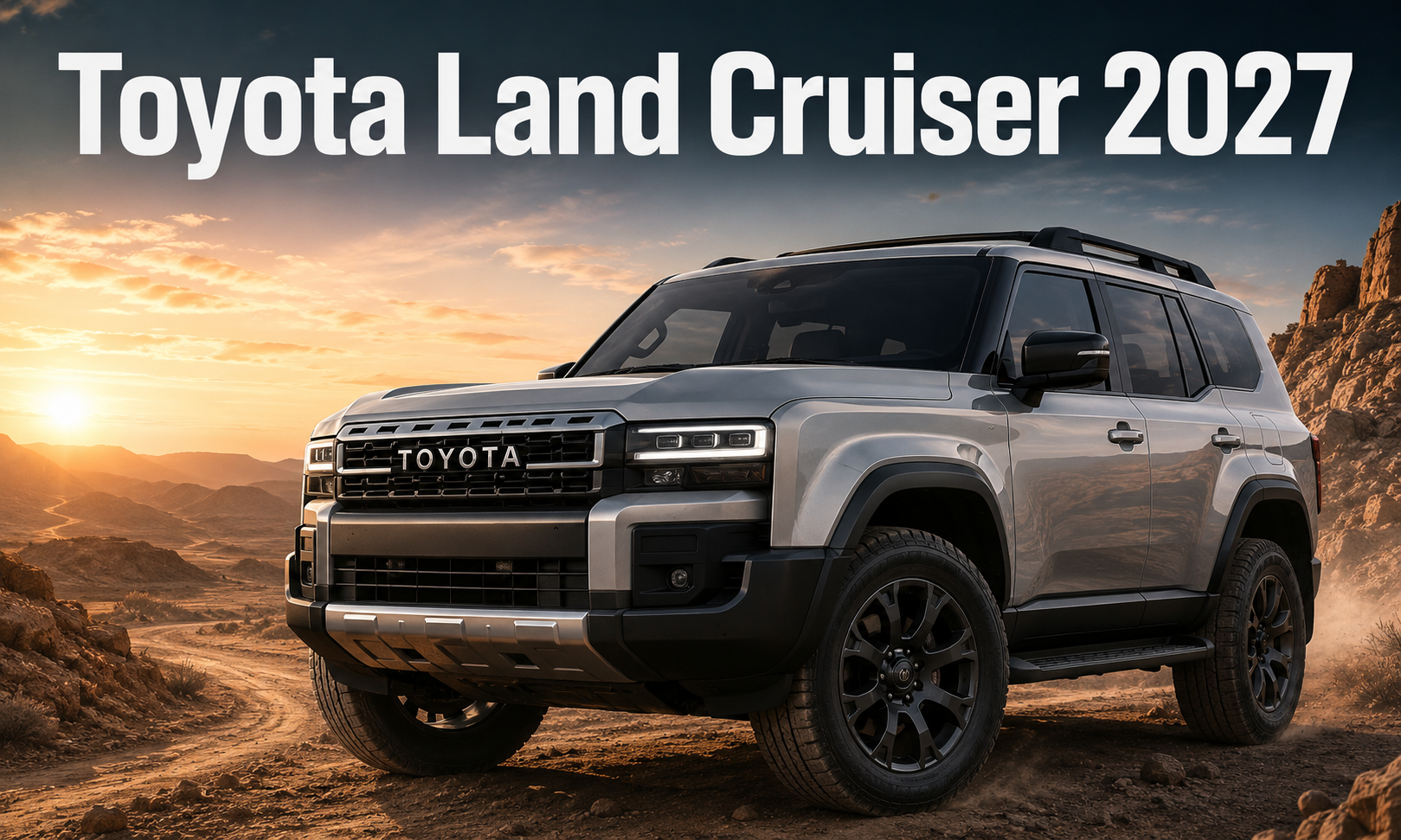
    The Toyota Land Cruiser 2027 returns with small but useful upgrades rather than a redesign. Toyota adds an available high-mounted air intake, heated and ventilated second-row outboard seats through the Premium Package, and a new black exterior color called Inked. The 326-hp hybrid powertrain, full-time four-wheel drive, body-on-frame construction, and two-trim lineup continue.

    The current Car and Driver Land Cruiser review gives the SUV a 9.5 out of 10 rating, praising its strong hybrid torque, manageable size, and ability to work well on pavement and dirt. Its main tradeoffs are a high price, no third row, and fuel economy that is only moderate for a hybrid.

    Key Takeaways

    Toyota offers two grades: Land Cruiser 1958 and Land Cruiser.

    Toyota lists base MSRPs of $58,080 for the 1958 and $64,155 for the Land Cruiser trim, while Car and Driver shows $59,675 to $65,750 after destination.

    Every model uses a turbocharged 2.4-liter i-FORCE MAX hybrid with 326 horsepower and 465 lb-ft of torque.

    Full-time four-wheel drive, low-range gearing, locking center and rear differentials, Crawl Control, and a 6,000-pound tow rating are standard.

    The 2027 upgrades are useful but limited, so discounted 2026 inventory may offer nearly the same vehicle for less money.

    The Land Cruiser is a five-seat SUV. Buyers needing three rows should compare the Toyota Sequoia or a larger crossover.

    What Changed for the 2027 Land Cruiser?

    Toyota has kept the model-year changes focused. The available high-mounted air intake moves the air inlet higher along the passenger-side A-pillar, which can help reduce exposure to dust on trails. It should not be treated as permission to drive through water without checking the vehicle’s official limits and safe water-crossing practices.

    The Premium Package now includes heated and ventilated outboard seats in the second row, giving rear passengers a comfort feature that was previously missing. Inked joins the paint palette as a deep black finish, while heritage-inspired colors such as Trail Dust and Heritage Blue remain available with a contrasting Grayscape roof.

    Toyota confirmed the 2027 changes in its official Land Cruiser announcement, along with the continuing 326-hp hybrid system, 23-mpg combined rating, full-time four-wheel drive, and 6,000-pound towing capacity.

    2027 Update Availability Why It Matters
    High-mounted air intake Available Adds trail-focused function and a more expedition-ready appearance
    Heated and ventilated rear outboard seats Premium Package Improves comfort for second-row passengers
    Inked exterior paint New color Adds a darker, more formal appearance
    Mechanical redesign No Powertrain, frame, drivetrain, and two-trim structure continue

    How Much Does the 2027 Toyota Land Cruiser Cost?

    Toyota’s consumer website lists the Land Cruiser 1958 at $58,080 and the Land Cruiser trim at $64,155 before the $1,595 delivery, processing, and handling fee. Car and Driver therefore shows a retail range of $59,675 to $65,750. Taxes, registration, documentation fees, accessories, protection products, and dealer pricing are additional.

    Trim Base MSRP Price With Destination Best Fit
    Land Cruiser 1958 $58,080 $59,675 Buyers wanting heritage style and the core off-road hardware
    Land Cruiser $64,155 $65,750 Drivers wanting better technology, comfort, and trail equipment

    The higher trim is the better value for many shoppers because it adds a 12.3-inch touchscreen, ventilated front seats, power-adjustable seating, SofTex upholstery, wider all-terrain tires, a power liftgate, roof rails, Multi-Terrain Select, an electronically disconnecting front stabilizer bar, and color-selectable Rigid Industries fog lights.

    The 1958 remains appealing for buyers who prefer round headlamps, fabric seating, and a simpler cabin. It does not lose the essential drivetrain equipment, so it is not a decorative base model with reduced four-wheel-drive capability.

    Is the Premium Package Worth Adding?

    The Premium Package is designed for buyers who want the Land Cruiser to feel closer to a luxury SUV. It adds leather-trimmed front seats, a 14-speaker JBL audio system, a head-up display, a digital rearview mirror, a power moonroof, Digital Key, lane-change assistance, front cross-traffic alert, traffic-jam assistance, and the new heated and ventilated second-row outboard seats.

    The package suits long-distance family use and buyers cross-shopping a Lexus GX. A console cool box and moonroof may also be available separately.

    What Powertrain Does the Land Cruiser Use?

    Every 2027 Land Cruiser uses Toyota’s i-FORCE MAX system. A turbocharged 2.4-liter four-cylinder is paired with an electric motor inside the transmission housing. Combined output is 326 horsepower and 465 lb-ft of torque, sent through an eight-speed automatic transmission.

    The electric motor’s greatest contribution is low-speed torque rather than silent electric commuting. This is not a plug-in hybrid, and the battery is not designed for meaningful electric-only range. The driver fills the fuel tank normally while regenerative braking and the gasoline engine manage the battery.

    Specification 2027 Land Cruiser
    Powertrain 2.4-liter turbocharged four-cylinder hybrid
    Output 326 hp and 465 lb-ft
    Transmission 8-speed automatic
    Drivetrain Full-time 4WD with 2-speed transfer case
    EPA fuel economy 22 city / 25 highway / 23 combined mpg
    Car and Driver 0 to 60 mph 7.7 seconds
    Maximum towing 6,000 pounds
    Seating Five

    Is It Still a Real Land Cruiser Off-Road?

    Yes, although the American-market model is smaller and more affordable than the previous V-8 Land Cruiser. It rides on Toyota’s TNGA-F truck platform with a fully boxed frame and double-wishbone front suspension. Full-time four-wheel drive and an electronically controlled two-speed transfer case are standard.

    Both trims include locking center and rear differentials, Crawl Control, Downhill Assist Control, and an automatic limited-slip differential. The upper trim adds Multi-Terrain Select and the Stabilizer Disconnect Mechanism, which increases front suspension articulation on uneven terrain.

    The available Multi-Terrain Monitor uses exterior cameras to show areas close to the vehicle that may be hidden from the driver. This can help with rocks, ruts, and tight trail placement, but it does not replace a spotter when the terrain is difficult.

    Capability Feature 1958 Land Cruiser
    Full-time 4WD and low range Standard Standard
    Center and rear locking differentials Standard Standard
    Crawl Control Standard Standard
    Multi-Terrain Select Not included Standard
    Stabilizer Disconnect Mechanism Not included Standard
    Multi-Terrain Monitor Not included Available

    How Good Is the Land Cruiser on the Highway?

    The current generation is easier to drive daily than the large Land Cruisers sold previously in the United States. Its narrower body and shorter length make parking and urban traffic less intimidating, while the suspension delivers a smoother and quieter ride than purpose-built off-road rivals such as the Jeep Wrangler and Ford Bronco.

    A 7.7-second run to 60 mph is adequate but not quick for this price range. The hybrid delivers strong low-speed pull, yet the four-cylinder can sound busy. Buyers wanting effortless V-6 power should compare the Lexus GX 550.

    Does the Hybrid Deliver Good Fuel Economy?

    The EPA rating is 22 mpg city, 25 mpg highway, and 23 mpg combined. That is better than the previous V-8 Land Cruiser and many traditional off-road SUVs, but it is not exceptional for a modern hybrid. The Land Cruiser is heavy, shaped like a box, and fitted with a full-time four-wheel-drive system, so its hybrid hardware is used mainly to deliver torque and acceptable efficiency.

    Car and Driver recorded 21 mpg during its 75-mph highway test. Roof accessories, all-terrain tires, towing, and high speeds can reduce real-world economy.

    Official fuel-economy ratings can be checked through the U.S. Department of Energy fuel-economy database by searching for the exact model year and vehicle configuration.

    How Practical Is the Interior?

    The Land Cruiser is a five-seater with good headroom and a spacious second row. The rear seat folds for cargo, although the hybrid battery creates a raised floor that is not perfectly flat.

    Car and Driver fit 17 carry-on suitcases behind the second row and 31 with the rear seat folded. The 2,400-watt inverter is useful for camping equipment, power tools, laptops, small appliances, and emergency backup needs within the system’s limits.

    The 1958 uses an 8-inch touchscreen and six-speaker audio. The upper trim receives a 12.3-inch touchscreen and a 10-speaker system, with wireless Apple CarPlay and Android Auto on both models.

    How Does It Compare With the 4Runner and Lexus GX?

    Model Main Strength Main Tradeoff
    Toyota Land Cruiser Balanced comfort, heritage, standard hybrid torque, and full-time 4WD Expensive for a five-seat Toyota and only moderately efficient
    Toyota 4Runner Wider trim range and lower entry price More choices make configuration complicated and some trims are less refined
    Lexus GX 550 V-6 power, luxury materials, and stronger acceleration Higher price and lower fuel economy
    Ford Bronco Open-air design and extensive trail customization Noisier and less refined on long highway drives
    Jeep Wrangler Iconic removable-body experience and extreme off-road options Less comfortable and practical for daily use

    Should You Buy a 2027 Model or Look for a 2026?

    Choose the 2027 If You… Choose a 2026 If You…
    Want the Inked exterior color Find a meaningful dealer discount
    Need heated and ventilated second-row outboard seats Do not need the new Premium Package feature
    Want the available high-mounted air intake Prefer the same core drivetrain for less money
    Value the newest model year for resale Can find the exact color and equipment immediately

    Because the mechanical package is unchanged, the decision should be based on pricing and equipment rather than fear of missing a major upgrade. A discounted 2026 Land Cruiser with the correct trim may be a better financial choice than paying more for a 2027 with features the buyer will not use.

    What Should You Check Before Buying?

    1. Compare the Toyota base MSRP with the full price after destination and dealer fees.
    2. Confirm whether the vehicle is a 1958 or the higher Land Cruiser trim.
    3. Review the window sticker for the Premium Package, moonroof, cool box, paint, wheels, and accessories.
    4. Check whether the high-mounted air intake is factory-installed or dealer-added.
    5. Get an insurance quote and price replacement all-terrain tires before purchase.
    6. Verify the payload label and towing equipment for the exact vehicle.
    7. Request the complete out-the-door price in writing before leaving a deposit.

    Frequently Asked Questions

    How much is the 2027 Toyota Land Cruiser?

    Toyota lists base MSRPs of $58,080 for the Land Cruiser 1958 and $64,155 for the Land Cruiser trim. With the $1,595 destination charge, the prices are $59,675 and $65,750 before other costs.

    What is new for the 2027 Land Cruiser?

    Toyota adds an available high-mounted air intake, heated and ventilated second-row outboard seats through the Premium Package, and a new Inked exterior color.

    Does the Land Cruiser have a V-6 or V-8?

    No. Every U.S. model uses a turbocharged 2.4-liter four-cylinder hybrid rated at 326 horsepower and 465 lb-ft.

    Does it have a third row?

    No. The 2027 Land Cruiser is a five-seat, two-row SUV.

    How much can it tow?

    The maximum rating is 6,000 pounds when properly equipped. Payload, passengers, cargo, and tongue weight must also be considered.

    Is the Land Cruiser a plug-in hybrid?

    No. It is a conventional performance hybrid that does not require external charging.

    Which trim is the better value?

    The upper Land Cruiser trim is the stronger all-around value for buyers who want comfort, technology, and the full off-road feature set. The 1958 appeals to buyers prioritizing heritage styling and a lower price.

    The Bottom Line

    The 2027 Toyota Land Cruiser remains a modern interpretation of a legendary off-roader. It is smaller, more efficient, and easier to live with than the old V-8 model while retaining a boxed frame, low-range four-wheel drive, locking differentials, and serious trail equipment.

    The new high-mounted intake, rear-seat climate comfort, and Inked paint improve the package without changing its character. The higher Land Cruiser trim is the best choice for most buyers, but a discounted 2026 model may deliver nearly the same ownership experience for less money.

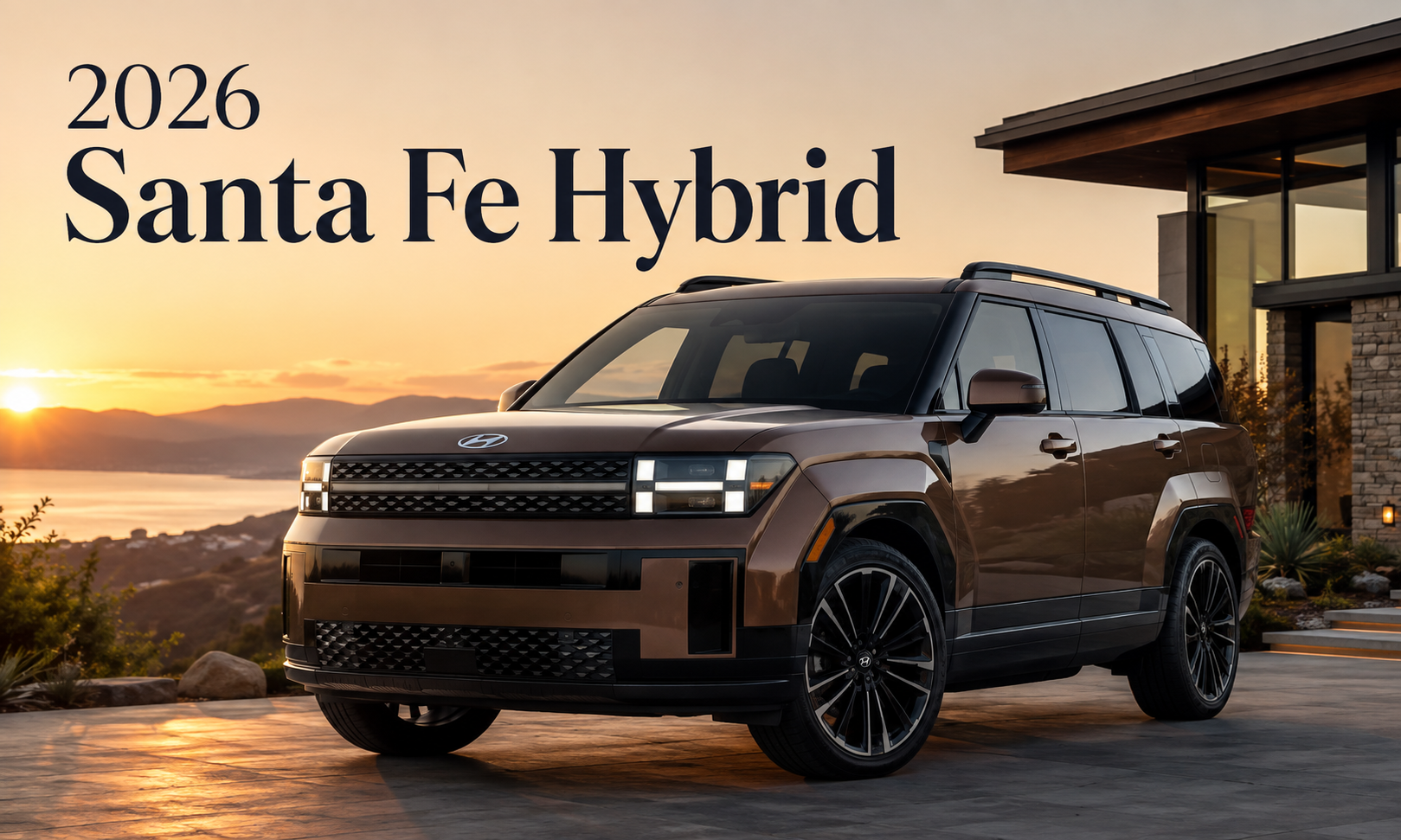
  • 2026 Hyundai Santa Fe Hybrid: Price, MPG, Trims, and Family Value

    2026 Hyundai Santa Fe Hybrid: Price, MPG, Trims, and Family Value

    A U.S. buyer’s guide to hybrid savings, three-row space, trim choices, towing, technology, safety, and daily usability

    The 2026 Santa Fe Hybrid is a three-row family SUV built around efficiency, comfort, and flexible interior space rather than rapid acceleration or serious off-road ability. Its turbocharged hybrid powertrain produces 231 horsepower, front-wheel drive is standard, all-wheel drive is optional, and EPA estimates reach 36 mpg combined.

    For 2026, Hyundai adds a less expensive SE trim and makes several small equipment changes across the range. The result is one of the more affordable ways to combine hybrid fuel economy with six- or seven-passenger seating, although shoppers should understand that the third row is compact and the 2,000-pound towing limit is modest.

    Key Takeaways

    Hyundai lists four hybrid trims: SE, SEL, Limited, and Calligraphy, with front-wheel drive or optional HTRAC all-wheel drive.

    The powertrain combines a turbocharged 1.6-liter four-cylinder with an electric motor for 231 horsepower and uses a conventional six-speed automatic.

    Front-wheel-drive models are rated at 37 mpg city, 36 highway, and 36 combined; all-wheel-drive versions are rated at 35 city, 34 highway, and 34 combined.

    The Santa Fe Hybrid seats six or seven, but its third row is best for children, shorter adults, or occasional use.

    Cargo capacity is 14.6 cubic feet behind the third row, 40.5 behind the second row, and 79.6 behind the front seats.

    The hybrid can tow up to 2,000 pounds with trailer brakes, so buyers with heavier trailers should consider the gas Santa Fe or another SUV.

    What Is New for the 2026 Santa Fe Hybrid?

    The biggest lineup change is the new SE base trim. It lowers the entry point for families that want the hybrid powertrain without leather seating, larger wheels, or the most advanced convenience features.

    The SEL gains USB charging ports for third-row passengers. Limited models now include second-row captain’s chairs and dual wireless phone chargers as standard equipment, although a no-cost second-row bench remains available. Calligraphy buyers can choose a new Pecan Brown Nappa leather interior.

    The Car and Driver 2026 Santa Fe Hybrid review gives the SUV a 9 out of 10 rating and highlights its distinctive styling, strong standard equipment, practical cabin, and good fuel economy. Its main criticisms are slow acceleration, ordinary handling, and a tight third row.

    How Much Does the 2026 Hyundai Santa Fe Hybrid Cost?

    Hyundai’s published pricing sheet lists base MSRPs from $36,150 to $50,250 before a $1,600 freight charge. Car and Driver rounds the retail range to approximately $38,000 to $52,100. Taxes, title, registration, documentation fees, accessories, and dealer pricing are additional.

    Trim FWD Base MSRP AWD Base MSRP Best Fit
    SE $36,150 $37,950 Budget-focused families wanting the hybrid powertrain
    SEL $38,440 $40,240 Best balance of comfort, technology, and price
    Limited $45,450 $47,250 Buyers wanting leather, premium technology, and added convenience
    Calligraphy $48,450 $50,250 Shoppers prioritizing Nappa leather, advanced assistance, and top features

    The SEL is the strongest value for most buyers. It adds useful daily equipment without the large price jump to Limited. The SE makes sense when the goal is simply to obtain the hybrid drivetrain and three-row body at the lowest cost.

    How Does the Hybrid Powertrain Perform?

    Every Santa Fe Hybrid uses a turbocharged 1.6-liter four-cylinder, an electric motor, and a six-speed automatic transmission. Combined output is 231 horsepower. Unlike many hybrids that use a continuously variable transmission, the Hyundai shifts through traditional gears, which can make acceleration feel more familiar.

    The system is tuned for smooth city driving and relaxed family transportation. Electric assistance helps the SUV move away from stops without requiring the gasoline engine to work as hard, but highway passing can feel slow when the vehicle is full of passengers and luggage.

    Specification 2026 Santa Fe Hybrid
    Engine Turbocharged 1.6-liter four-cylinder hybrid
    Combined output 231 horsepower
    Transmission 6-speed automatic with SHIFTRONIC
    Drivetrain Front-wheel drive or HTRAC all-wheel drive
    Car and Driver 0 to 60 mph 7.8 seconds
    Fuel tank 17.7 gallons
    Maximum trailer weight with brakes 2,000 pounds
    Ground clearance 7.0 inches

    Car and Driver recorded a 7.8-second 0-to-60-mph time in its testing. The gas-powered Santa Fe is quicker, but the hybrid’s calmer response is adequate for commuting, school runs, and normal interstate travel.

    How Much Fuel Can the Hybrid Save?

    Front-wheel-drive Santa Fe Hybrid models are EPA-rated at 36 mpg combined, compared with 24 mpg combined for the gas Santa Fe FWD. All-wheel-drive hybrid models are rated at 34 mpg combined, compared with 23 mpg combined for the regular AWD version.

    The hybrid price premium is approximately $1,350 when equivalent trims and drivetrains are compared using Hyundai’s pricing sheet. The following example assumes 12,000 miles per year and gasoline at $3.50 per gallon.

    Vehicle Combined MPG Estimated Annual Fuel Cost Difference
    Santa Fe Hybrid FWD 36 mpg $1,167 Baseline
    Santa Fe Gas FWD 24 mpg $1,750 About $583 more per year
    Santa Fe Hybrid AWD 34 mpg $1,235 Baseline
    Santa Fe Gas AWD 23 mpg $1,826 About $591 more per year

    At those assumptions, the fuel savings could recover the $1,350 hybrid premium in a little over two years. The payback becomes faster with higher mileage or higher gasoline prices and slower for low-mileage drivers. Actual economy also changes with weather, speed, traffic, tires, cargo, and driving style.

    Is the Santa Fe Hybrid Spacious Enough for a Family?

    The first two rows are the strongest part of the cabin. Front-seat occupants receive generous space, a wide center console, and a dashboard with useful storage. Second-row legroom is adult-friendly, and captain’s chairs make third-row access easier.

    The third row is more limited. It can handle children, shorter adults, or occasional passengers, but families that regularly carry six or seven adults should compare the Hyundai Palisade Hybrid, Toyota Grand Highlander Hybrid, or another larger three-row SUV.

    Interior Measurement Capacity
    Second-row legroom in hybrid models 41.5 inches
    Third-row legroom 30.0 inches
    Cargo behind third row 14.6 cubic feet
    Cargo behind second row 40.5 cubic feet
    Cargo behind front seats 79.6 cubic feet
    Passenger interior volume 151.0 cubic feet

    Behind the third row, there is enough space for groceries, school bags, or several small suitcases, but not a large family vacation load. Folding the third row creates a broad cargo floor that is much more useful for strollers, sports equipment, pets, and home-improvement supplies.

    Should You Choose Front-Wheel Drive or All-Wheel Drive?

    Front-wheel drive provides the lowest price and best fuel economy. It is the logical choice for drivers in warm or moderate climates who spend most of their time on paved roads.

    HTRAC all-wheel drive adds $1,800 and reduces combined fuel economy from 36 to 34 mpg. It can provide extra confidence in snow, heavy rain, gravel, and steep driveways, but tires remain the most important traction component. A front-wheel-drive vehicle with appropriate winter tires can outperform an AWD vehicle on unsuitable tires.

    Choose FWD If You… Choose AWD If You…
    Want the lowest purchase and fuel cost Regularly drive in snow or on steep roads
    Live in a mild climate Use gravel roads, cabins, or rural properties
    Mostly commute on maintained pavement Prefer added traction confidence
    Do not need Snow mode Accept the higher price and 2-mpg efficiency loss

    Can the Santa Fe Hybrid Tow a Trailer?

    The hybrid is rated to tow up to 2,000 pounds with trailer brakes and 1,650 pounds without trailer brakes. That can be enough for a small utility trailer, lightweight personal watercraft, or certain compact campers, but the rating leaves little room for heavier recreational equipment.

    The gas Santa Fe is rated for 3,500 pounds, while the XRT reaches 4,500 pounds. Buyers who tow frequently should calculate trailer weight, tongue weight, passengers, cargo, and the exact vehicle payload rather than relying only on the maximum advertised tow figure.

    Which Trim Is the Best Buy?

    Trim Why Buy It Why Skip It
    SE Lowest price, 12.3-inch touchscreen, three rows, core safety equipment Basic cloth cabin and fewer convenience features
    SEL Best value, upgraded seating material, Digital Key, wireless charging, third-row USB ports Still lacks several premium cameras and luxury features
    Limited Leather, dual wireless chargers, advanced displays, cameras, ventilated seats Large price jump over SEL
    Calligraphy Nappa leather, head-up display, Highway Driving Assist 2, premium appearance Price approaches larger and more powerful SUVs

    What Technology and Safety Features Are Included?

    All trims use a 12.3-inch infotainment touchscreen with wireless Apple CarPlay and Android Auto. Depending on trim, buyers can add a 12.3-inch digital gauge cluster, Bose audio, dual wireless charging, a head-up display, surround-view cameras, a digital rearview mirror, and remote parking assistance.

    Standard driver-assistance features include forward collision avoidance, blind-spot monitoring, rear cross-traffic collision avoidance, lane keeping assistance, lane following assistance, driver attention warning, and safe exit assistance. Higher trims add more advanced parking and highway-driving systems.

    The IIHS 2026 Hyundai Santa Fe safety page identifies the Santa Fe as a 2026 Top Safety Pick+ winner. Safety ratings apply to specific production details and test criteria, so buyers should still check the exact vehicle’s build date and equipment.

    What Warranty Does Hyundai Provide?

    Hyundai’s U.S. coverage includes a 5-year or 60,000-mile new-vehicle limited warranty and a 10-year or 100,000-mile powertrain limited warranty for the original owner. Hybrid battery and major hybrid-system components are also covered for 10 years or 100,000 miles.

    Complimentary scheduled maintenance is included for 3 years or 36,000 miles under Hyundai’s current program. Buyers should read the warranty handbook because transfer rules, maintenance requirements, exclusions, and commercial-use conditions can affect coverage.

    Frequently Asked Questions

    How much is the 2026 Hyundai Santa Fe Hybrid?

    Hyundai’s pricing sheet lists base MSRPs from $36,150 for the SE FWD to $50,250 for the Calligraphy AWD before the $1,600 freight charge and other fees.

    How many miles per gallon does it get?

    FWD models are rated at 37 mpg city, 36 highway, and 36 combined. AWD versions are rated at 35 city, 34 highway, and 34 combined.

    Does the Santa Fe Hybrid have three rows?

    Yes. It seats six or seven depending on the second-row configuration, but the third row is best for smaller passengers or occasional use.

    Is the Santa Fe Hybrid a plug-in?

    No. It is a conventional hybrid that charges its battery through the engine and regenerative braking. It does not need to be plugged in.

    How much can it tow?

    The maximum rating is 2,000 pounds with trailer brakes or 1,650 pounds without them.

    Is the hybrid faster than the gas Santa Fe?

    No. Car and Driver recorded 7.8 seconds to 60 mph for the hybrid, while the gas model was quicker in its testing.

    Which trim is the best value?

    SEL offers the best balance for most buyers, while SE has the lowest price and Limited provides the strongest premium-feature value.

    The Bottom Line

    The 2026 Hyundai Santa Fe Hybrid succeeds as an efficient and flexible family SUV. It offers a comfortable first and second row, useful cargo space, a broad trim range, strong safety equipment, and fuel economy that can repay the hybrid premium in a relatively short period for many drivers.

    Its limitations are equally clear. Acceleration is modest, the third row is tight, and the towing capacity is only 2,000 pounds. Buyers who accept those tradeoffs will find the SEL especially compelling, while Limited and Calligraphy provide a more upscale experience without moving to a luxury badge.

  • How to Turn Off CarPlay on Your iPhone or Vehicle

    How to Turn Off CarPlay on Your iPhone or Vehicle

    Step-by-step methods for disconnecting one trip, forgetting a car, disabling CarPlay everywhere, and stopping automatic reconnection

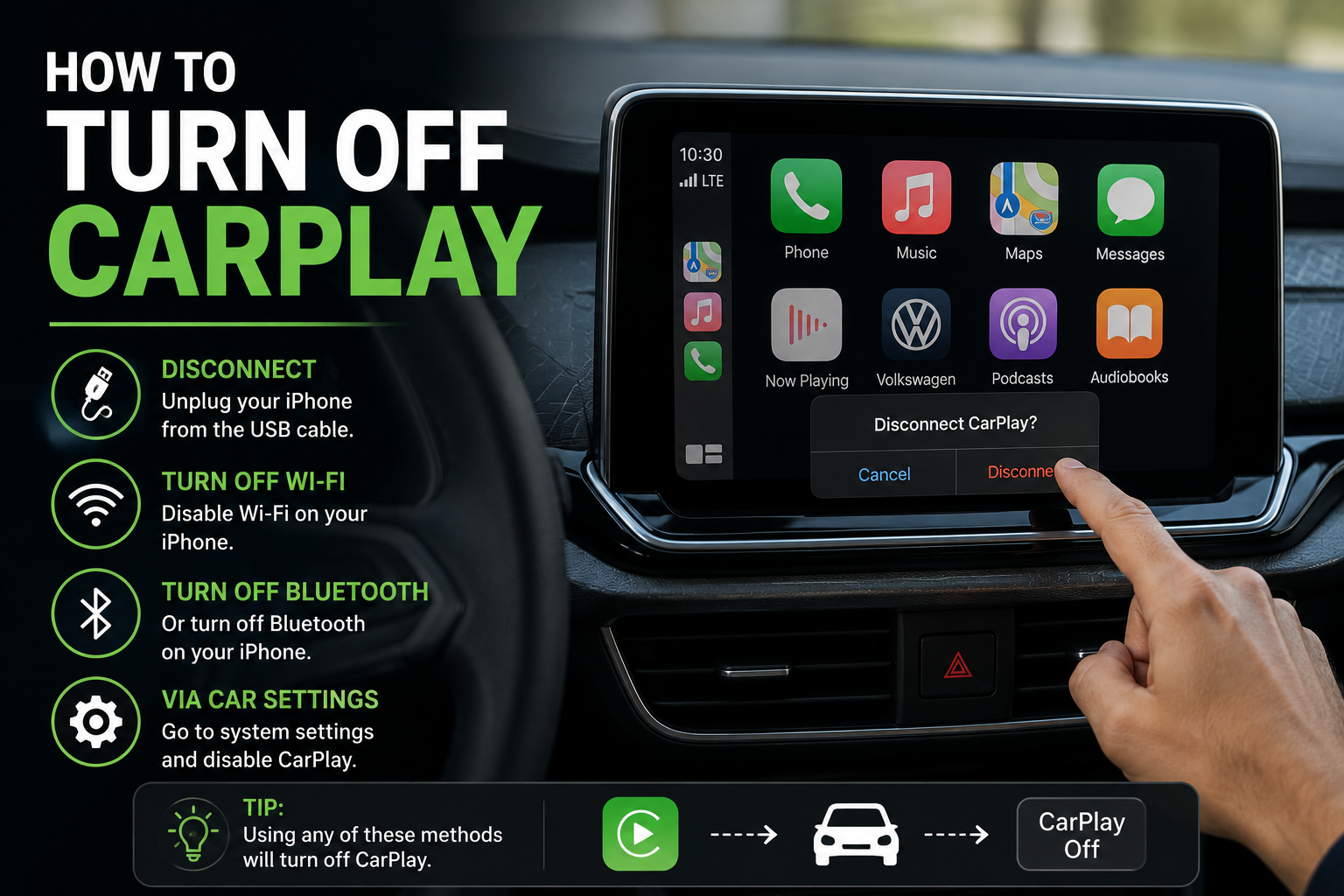
    Learning how to turn off CarPlay is straightforward once you decide whether you want a temporary disconnect or a complete block. You can unplug a wired connection, disconnect the phone through the vehicle’s projection menu, forget one vehicle in iPhone settings, or use Screen Time to prevent CarPlay from working with any car.

    The correct method depends on your goal. Forgetting one car does not disable CarPlay in other vehicles. Turning CarPlay off through Screen Time blocks the feature more broadly. Vehicle menus also vary, so the option may be labeled Apple CarPlay, Phone Projection, Smartphone Integration, Device Manager, or Connected Devices.

    Key Takeaways

    For one wired trip, unplug the iPhone or switch the vehicle to another audio or navigation source.

    To remove one saved vehicle, open Settings > General > CarPlay, select the car, and tap Forget This Car.

    To disable CarPlay on every vehicle, use Settings > Screen Time > Content & Privacy Restrictions > Allowed Apps & Features, then turn CarPlay off.

    Wireless CarPlay may also need to be removed from the vehicle’s connected-device menu if it reconnects automatically.

    Before returning a rental car, forget the vehicle on the iPhone and delete the iPhone from the car’s infotainment system.

    Which CarPlay Turn-Off Method Should You Use?

    Your Goal Best Method What Happens
    Stop CarPlay for one wired trip Unplug the cable or use a non-CarPlay USB port The phone stops projecting to the vehicle
    Disconnect wireless CarPlay temporarily Use the vehicle’s phone or projection menu The current session ends without deleting every setting
    Stop one car from reconnecting Forget This Car on the iPhone and remove the phone from the vehicle The pairing must be set up again later
    Disable CarPlay in every car Turn off CarPlay in Screen Time restrictions CarPlay cannot launch until the restriction is reversed

    How Do You Turn Off Wired CarPlay Temporarily?

    For a wired connection, the fastest method is to unplug the iPhone from the CarPlay USB port. The vehicle should return to its built-in interface or another selected source. If you still want to charge the phone, look for a charge-only USB port, use a 12-volt adapter, or use wireless charging if the vehicle supports it.

    Some vehicles have multiple USB ports, but only one supports CarPlay. A port marked with a smartphone or CarPlay symbol usually starts phone projection. Another port may provide power without launching CarPlay. Check the owner’s manual because port functions differ by make, model, trim, and model year.

    You can also keep the cable connected and select the vehicle’s native home screen, radio, or navigation source. This may hide CarPlay without ending the connection. If the car automatically returns to CarPlay, use the vehicle’s device settings to disconnect the phone or disable automatic phone projection.

    How Do You Forget One Car on an iPhone?

    Forgetting a vehicle is the cleanest option when you want CarPlay to stop connecting to one specific car but continue working in other vehicles.

    1. Open the Settings app on the iPhone.
    2. Tap General.
    3. Tap CarPlay.
    4. Select the vehicle you want to remove.
    5. Tap Forget This Car.
    6. Confirm the removal.

    The next time you want to use CarPlay with that vehicle, you will need to connect and approve it again. With a wired system, that may happen when you plug into the CarPlay USB port. With a wireless system, you may need to hold the voice-command button and repeat the vehicle’s pairing process.

    Apple’s CarPlay troubleshooting guide also recommends Settings > General > CarPlay > your car > Forget This Car when a saved connection is not working correctly.

    How Do You Disable CarPlay on Every Vehicle?

    Use Screen Time restrictions when you do not want the iPhone to activate CarPlay in any compatible vehicle. This can be useful for a family device, a teen driver, a work phone, or anyone who prefers the vehicle’s built-in interface.

    1. Open Settings.
    2. Tap Screen Time.
    3. Tap Content & Privacy Restrictions.
    4. Turn on Content & Privacy Restrictions if it is currently off.
    5. Tap Allowed Apps & Features.
    6. Find CarPlay and turn it off.

    On some older iOS versions, the menu may be labeled Allowed Apps instead of Allowed Apps & Features. When CarPlay is disabled in this menu, the iPhone should not launch CarPlay until you return to the same setting and turn it back on.

    A Screen Time passcode can prevent someone else from changing the restriction. Store that passcode securely. Losing it can make later changes inconvenient, especially on a child’s managed device.

    How Do You Stop Wireless CarPlay From Connecting Automatically?

    Wireless CarPlay uses a combination of Bluetooth for discovery and Wi-Fi for the active connection. Turning off only one radio may not be the most reliable long-term solution, and it also affects other accessories and networks.

    Start with the vehicle’s infotainment settings. Open the phone, projection, or connected-device menu, select the iPhone, and look for Disconnect, Disable CarPlay, Use as Bluetooth Device, Auto Connect, or Delete Device. The wording varies widely.

    If the phone keeps reconnecting, remove the relationship from both sides. On the iPhone, use Forget This Car. In the vehicle, delete the iPhone from the paired-device list. Restart both devices before pairing again only if you later decide to restore CarPlay.

    Apple explains that wireless setup relies on Wi-Fi, Bluetooth, and the saved vehicle entry in its current iPhone CarPlay connection instructions. That is why deleting only a Bluetooth entry may not fully remove every CarPlay setting.

    Can You Use Bluetooth Audio Without CarPlay?

    In many vehicles, yes. Pair the iPhone through the car’s normal Bluetooth menu, select Bluetooth Audio as the source, and avoid connecting to the CarPlay USB port or wireless projection profile. This can preserve music streaming and hands-free calling while using the vehicle’s native screen.

    Some systems combine Bluetooth pairing and wireless CarPlay into one setup process. If the vehicle immediately enables CarPlay again, open its device settings and change the iPhone’s role from CarPlay or Phone Projection to Bluetooth Audio. Not every infotainment system offers this separation.

    How Do You Turn Off CarPlay in a Rental Car?

    Rental vehicles deserve extra attention because saved contacts, recent destinations, messages, and device names may remain visible in the infotainment system after the trip. CarPlay is designed to keep most personal data on the iPhone, but it is still wise to remove the pairing.

    • On the iPhone, go to Settings > General > CarPlay and forget the rental vehicle.
    • Open the rental car’s connected-device or phone menu and delete your iPhone.
    • Clear recent destinations or navigation history stored in the vehicle’s native system.
    • Remove any Bluetooth pairing that remains.
    • Check the center console and USB ports before returning the vehicle.

    Why Does CarPlay Keep Turning Back On?

    Possible Cause What to Try
    The car remembers the iPhone Delete the phone from the vehicle’s device list
    The iPhone remembers the car Use Settings > General > CarPlay > Forget This Car
    Automatic projection is enabled Turn off Auto Connect or Automatic CarPlay in the vehicle menu
    A CarPlay USB port is being used Move the cable to a charge-only port or a 12-volt charger
    Screen Time restriction was reversed Check Allowed Apps & Features and confirm CarPlay is off
    Infotainment software is behaving incorrectly Restart the iPhone and car, then check for iOS and vehicle firmware updates

    What Should You Do If CarPlay Will Not Disconnect?

    Begin with the least disruptive steps. Switch the vehicle to its native home screen, disconnect the phone through the device menu, or unplug the cable. If that fails, turn the vehicle off completely, open and close the driver’s door if required to shut down the infotainment system, and restart the iPhone.

    For a persistent wireless connection, forget the car on the iPhone and delete the phone from the vehicle. Update the iPhone to the latest compatible iOS version and check the vehicle manufacturer’s instructions for infotainment updates. Avoid resetting all iPhone network settings unless simpler steps fail because that also removes saved Wi-Fi networks and other connection information.

    Does Turning Off Siri Disable CarPlay?

    CarPlay requires Siri for setup and many voice functions, so disabling Siri may stop CarPlay from working correctly. However, turning off Siri is not the best way to manage CarPlay because it affects voice features throughout the iPhone. Forget the car or use Screen Time restrictions instead.

    Can You Hide CarPlay Without Fully Disabling It?

    Yes. Select the vehicle’s native interface, radio, climate, or navigation screen while keeping CarPlay connected in the background. This is useful when you still want phone calls or audio but need access to built-in vehicle controls.

    Some vehicles also let you choose whether CarPlay opens automatically at startup. Look for a setting such as Start CarPlay Automatically, Launch Phone Projection, or Remember Last Screen. The vehicle owner’s manual is the best source for model-specific wording.

    Frequently Asked Questions

    What is the fastest way to turn off CarPlay?

    For wired CarPlay, unplug the cable. For wireless CarPlay, disconnect the iPhone through the vehicle’s connected-device or phone-projection menu.

    Does Forget This Car disable CarPlay everywhere?

    No. It removes only the selected vehicle. CarPlay can still work in other saved or newly connected cars.

    Can I permanently disable CarPlay on my iPhone?

    You can block it through Screen Time by turning CarPlay off under Content & Privacy Restrictions and Allowed Apps & Features. The setting can be reversed later.

    Why does CarPlay start every time I charge my phone?

    You may be using the vehicle’s CarPlay-enabled USB port. Try a charge-only port, wireless charger, or 12-volt charging adapter.

    Will deleting Bluetooth stop wireless CarPlay?

    Not always. Wireless CarPlay also uses Wi-Fi and a saved CarPlay vehicle profile. Remove the connection from Settings > General > CarPlay and from the vehicle.

    Can I use the car’s navigation while CarPlay is connected?

    Usually yes. Press the vehicle’s native Home, Menu, Navigation, or infotainment button. Exact behavior depends on the vehicle.

    Should I remove CarPlay after using a rental car?

    Yes. Forget the vehicle on the iPhone and delete the phone from the rental car’s device list before returning it.

    The Bottom Line

    The best way to turn off CarPlay depends on how long you want it disabled. Unplugging or disconnecting through the vehicle works for one trip. Forget This Car prevents one vehicle from reconnecting. Screen Time restrictions block CarPlay across compatible vehicles.

    For wireless systems and rental cars, remove the connection from both the iPhone and the vehicle. This prevents automatic reconnection and reduces the chance that personal device information remains stored in the infotainment system.

  • Volkswagen Atlas 2026: Buy Now or Wait for 2027?

    Volkswagen Atlas 2026: Buy Now or Wait for 2027?

    A family-focused comparison of price, trims, space, performance, towing, technology, discounts, and the redesigned next-generation Atlas

    2026 Atlas fact Details
    Starting MSRP $39,310 before the $1,475 destination charge
    Delivered base price $40,785 for the SE FWD
    Engine 269-hp turbocharged 2.0-liter four-cylinder
    Torque 273 lb-ft
    Transmission Eight-speed automatic
    Drivetrains Front-wheel drive or 4Motion all-wheel drive
    Seating Up to seven; available second-row captain’s chairs reduce capacity to six
    Maximum cargo 96.6 cubic feet
    Maximum towing 5,000 pounds when properly equipped
    Best-value trim SE with Technology
    The short verdict

    Buy the 2026 Atlas when you need a spacious three-row SUV now and can secure a meaningful discount. Wait for the 2027 Atlas when its stronger 282-hp engine, larger screens, more premium cabin, revised controls, and newest safety technology justify a higher expected price.

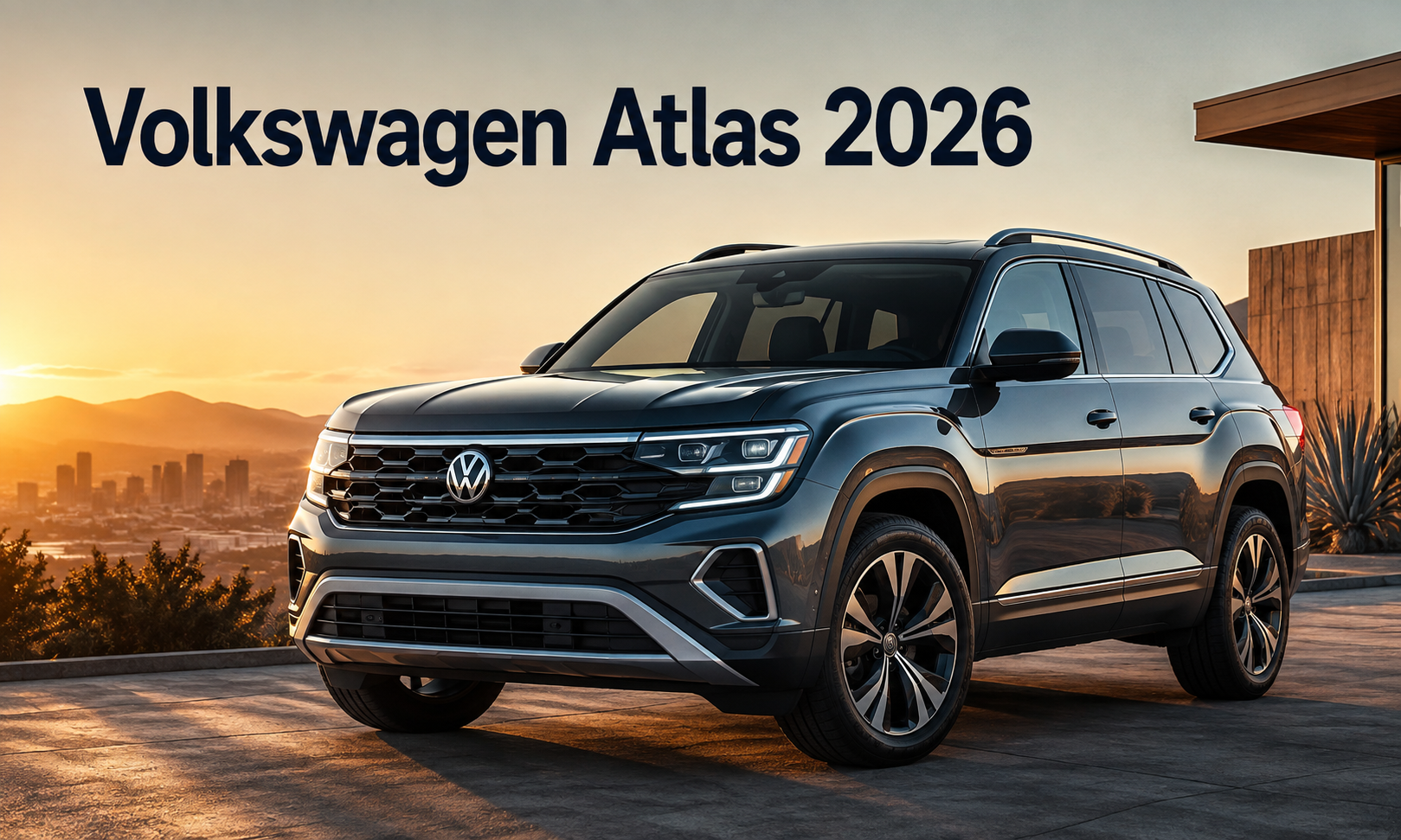
    Volkswagen Atlas 2026 remains a strong family SUV because it offers adult-friendly third-row space, easy cabin access, generous cargo capacity, a comfortable ride, and useful towing ability. Its main weakness is timing: the redesigned 2027 Atlas has already been revealed, which may make paying full sticker price for the outgoing model difficult to justify.

    This does not automatically make the 2026 model a poor purchase. An outgoing vehicle can provide excellent value when dealers offer cash discounts, favorable financing, or a better trade allowance. The right decision depends on how soon you need the SUV, how much you save, and whether the next-generation changes matter to your family.

    2026 Atlas Price and Trim Ladder

    Volkswagen lists the 2026 Atlas from $39,310 before destination. Adding the current $1,475 destination charge produces a delivered base price of $40,785. Four-wheel drive adds approximately $1,900 on trims where it is optional.

    Trim Approx. delivered price Best feature Best buyer
    SE FWD $40,785 Lowest price with strong standard comfort Budget-focused family
    SE with Technology FWD $45,205 Power liftgate, parking sensors, hitch, remote start Best overall value
    Peak Edition Upper $40,000s to low $50,000s Rugged styling and standard AWD Adventure-style buyer
    SEL Low to mid $50,000s Navigation, leather, added driver aids Comfort-focused buyer
    SEL Premium R-Line $56,105 Top cabin, audio, cameras, massage seats Luxury-focused buyer

    The supplied Car and Driver 2026 Volkswagen Atlas review rates the SUV 8 out of 10 and lists a $40,785 to $56,105 delivered-price range. Its strongest points are the roomy seven-seat cabin, compliant ride, large cargo area, and 5,000-pound tow rating.

    Why SE with Technology Is the Sweet Spot

    The SE with Technology adds equipment that families use regularly rather than cosmetic luxuries. It includes a hands-free power liftgate, front and rear parking sensors, remote start, a household-style outlet, upgraded exterior lighting, 20-inch wheels, and a factory trailer hitch.

    The trim costs approximately $4,420 more than the base SE before adding AWD or options. That is a meaningful increase, but it is easier to justify than jumping to the top trims, where leather, premium audio, massage seats, and larger wheels raise the transaction price without improving basic family utility.

    Engine, Acceleration, and Road Manners

    Every 2026 Atlas uses a 269-hp turbocharged 2.0-liter four-cylinder with 273 lb-ft of torque and an eight-speed automatic. The engine provides adequate power for merging, passing, and family travel, although it does not feel especially energetic when the SUV is fully loaded.

    Car and Driver recorded a 7.3-second 0-to-60-mph time. The Atlas favors calm, predictable road behavior rather than sporty handling. Its broad body and relaxed suspension create some lean in corners, but the ride is comfortable for highway trips and rough suburban roads.

    The Atlas returned 25 mpg in the publication’s 75-mph highway fuel-economy test. EPA ratings vary by drivetrain and trim, so buyers should compare the exact window sticker rather than assuming every version has the same mileage.

    Family Space Is the Main Reason to Buy

    Family need 2026 Atlas strength Compromise
    Third-row adults One of the roomiest in the class Seat padding is not the most luxurious
    Child-seat access Second row moves easily for third-row entry Captain’s chairs reduce total seating
    Cargo behind third row Useful for groceries and small bags Long vacations may still require roof storage
    Maximum cargo 96.6 cubic feet Large exterior size affects parking
    Road trips Comfortable ride and open cabin Touch controls can distract
    Towing Up to 5,000 pounds Confirm payload and hitch equipment

    The Atlas seats seven with a second-row bench or six with available captain’s chairs. The third row is more usable for adults than the small emergency seats found in several rivals. Maximum cargo capacity is 96.6 cubic feet with the rear rows folded.

    Technology and Cabin Weaknesses

    Standard equipment includes a 12-inch touchscreen, a 10.25-inch digital instrument display, wireless Apple CarPlay and Android Auto, wireless phone charging, three-zone climate control, ventilated front seats, and a heated steering wheel.

    The main criticism is the reliance on touch-sensitive controls. Climate and volume adjustments can require more attention than physical knobs, and some buyers find the cabin materials less convincing than those in the Kia Telluride, Hyundai Palisade, or Mazda CX-90.

    What the Redesigned 2027 Atlas Changes

    The 2027 Atlas begins a new generation. It moves to an updated platform, grows slightly in length, gains a more powerful 282-hp version of the turbocharged four-cylinder, and retains the eight-speed automatic, FWD, available AWD, and 5,000-pound towing capacity.

    Area 2026 Atlas 2027 Atlas
    Engine output 269 hp and 273 lb-ft 282 hp and 258 lb-ft
    Center display 12 inches 12.9 inches on base, 15 inches on higher trims
    Cabin controls Touch-heavy interface New multifunction console control
    Interior design Practical but ordinary materials More upscale trim and ambient lighting
    Wireless charging Single-pad setup depending on trim Available dual wireless chargers
    Availability On sale now Expected later in 2026
    Pricing Known and potentially discounted Higher expected pricing

    Volkswagen’s official 2026 Atlas page confirms the current 269-hp engine, 273 lb-ft of torque, 96.6 cubic feet of maximum cargo room, and 5,000-pound towing capacity. Those known specifications make the 2026 easier to price and compare than the newly announced replacement.

    When Buying the 2026 Makes More Sense

    • You need a three-row SUV before the redesigned model reaches dealers.
    • A dealer offers a meaningful discount, low APR, or strong trade value.
    • You prefer proven equipment over a first-year redesign.
    • The current 12-inch screen and controls are acceptable.
    • The SE with Technology has all the features your family needs.
    • You plan to keep the vehicle long enough that immediate resale value matters less.

    When Waiting for 2027 Makes More Sense

    • You want the newest interior and larger screen.
    • You dislike the current touch-based interface.
    • A more powerful engine and newer safety systems matter.
    • You normally replace vehicles after only three to five years.
    • The 2026 dealer is asking close to full MSRP.
    • You are willing to accept possible launch pricing and limited early inventory.
    Discount rule of thumb

    The closer a 2026 Atlas is priced to full MSRP, the stronger the argument for waiting. A substantial discount can offset the disadvantage of buying the outgoing generation, especially on an SE with Technology.

    How the 2026 Atlas Compares With Rivals

    Rival Why it may be better Why the Atlas may be better
    Kia Telluride More polished cabin and stronger overall refinement Roomier-feeling third row and possible discounts
    Hyundai Palisade Excellent features and upscale interior Simple powertrain choice and large cargo space
    Honda Pilot Strong V6 and family-friendly controls More adult-friendly third row
    Toyota Grand Highlander Available hybrid efficiency Potentially lower transaction price
    Mazda CX-90 More engaging handling and premium design Broader cabin and easier third-row access

    Frequently Asked Questions

    How much is the 2026 Volkswagen Atlas?

    The SE FWD starts at $39,310 before destination, or $40,785 including the current $1,475 destination charge.

    Which 2026 Atlas trim is best?

    The SE with Technology offers the strongest balance of useful family features and price.

    Does the Atlas have a V6?

    No. Every 2026 Atlas uses a 269-hp turbocharged 2.0-liter four-cylinder.

    How much can it tow?

    Up to 5,000 pounds when properly equipped. Confirm the exact vehicle’s hitch and payload ratings.

    Is the third row comfortable?

    It is among the more adult-friendly third rows in the midsize SUV class.

    Should I wait for the 2027 Atlas?

    Wait when technology, resale value, and the redesigned cabin matter more than possible discounts on the outgoing model.

    Final Verdict

    The 2026 Volkswagen Atlas is still a practical and comfortable family SUV. Its spacious third row, easy access, large cargo area, and 5,000-pound towing capacity remain competitive even as the model reaches the end of its generation.

    Buy the SE with Technology when the dealer offers a worthwhile discount and you need the vehicle now. Wait for the 2027 Atlas when the new interior, more powerful engine, larger displays, and stronger future resale position are worth paying more.

  • Hello world!

    Welcome to WordPress. This is your first post. Edit or delete it, then start writing!